School Vision Screening vs. Comprehensive Eye Exam in Totowa, NJ: What Parents Need to Know
As a new school year begins, many parents assume a passing school vision screening means their child’s eyes are healthy. Screenings are useful for identifying children who may need further care, but they are not the same as a comprehensive eye exam. Understanding the difference can help Totowa, NJ, families make informed decisions about their child’s vision, comfort, and classroom performance.
What Does a School Vision Screening Check?
A school vision screening is a brief assessment designed to flag possible vision concerns. It often measures how clearly a child can see letters or symbols at a distance. Depending on the program, it may also check eye alignment or use an automated screening device.
The goal is not to diagnose a condition. Instead, the screening helps determine whether a child should be referred to an eye doctor for a more detailed evaluation. A child who does not pass should receive timely follow-up care.
Why Can a Child Pass a Screening and Still Struggle?
Many screenings focus mainly on distance vision. A child may read the eye chart successfully while still having difficulty with near vision, focusing, eye coordination, or visual tracking. These skills are important for reading, writing, using a computer, and moving attention between a workbook and the classroom board.
Children also may not realize their vision is different from anyone else’s. They may adapt by sitting closer, avoiding detailed tasks, or relying more heavily on one eye. This is why parents should pay attention to symptoms even after a passing school screening.
Possible signs of a vision problem include:
• Frequent headaches or eye strain
• Squinting, covering one eye, or tilting the head
• Losing place while reading
• Holding books or screens unusually close
• Avoiding reading or homework
• Blurry vision at a distance or up close
• Difficulty concentrating on visual tasks
What Happens During a Comprehensive Eye Exam?
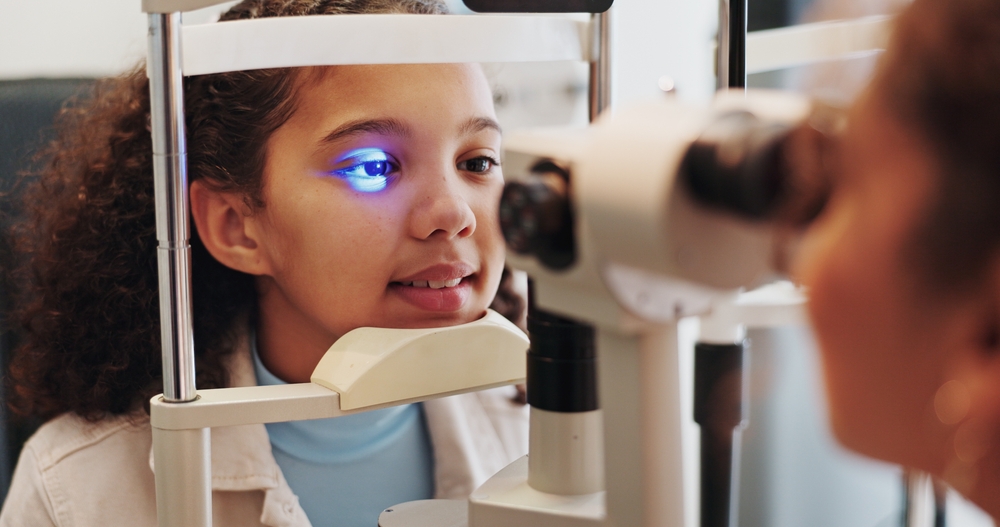
A comprehensive eye exam in Totowa, NJ, provides a much broader assessment. Our eye doctors evaluate visual clarity, determine whether glasses are needed, and check how well the eyes focus and work together. The exam also includes an evaluation of the internal and external health of the eyes.
This detailed approach can identify nearsightedness, farsightedness, astigmatism, eye coordination concerns, and other issues that may not be obvious during a school screening. It also gives parents an opportunity to discuss headaches, screen use, reading habits, family eye history, or changes in school performance.
When Should Parents Schedule an Eye Exam?
An eye exam is especially important when a child does not pass a screening, reports blurry vision, experiences recurring headaches, or shows changes in reading and classroom behavior. Parents may also consider scheduling an exam before the school year if their child has a current prescription, wears contact lenses, or has a family history of eye conditions.
Because children’s vision can change as they grow, regular eye care helps ensure that prescriptions and treatment plans remain appropriate. For children with progressive myopia, early evaluation can also help parents learn about available myopia management options at Totowa Eyecare.
Schedule your child’s comprehensive eye exam with Totowa Eyecare to support clear vision, healthy eyes, and greater confidence in the classroom. Contact our office in Totowa, NJ, by calling (973) 942-4221 to book an appointment.
Quick Links
Helpful Articles
All Eye Care Services
Find personalized eye care excellence with our comprehensive services. From eye exams to advanced diagnostics, trust us for all your vision needs.
Keep In Touch
For non-urgent questions or to learn more about our services, contact us today!
© 2026 Totowa Eyecare. All rights Reserved - Accessibility Statement - Privacy Policy - Sitemap
Managed and Designed by 