

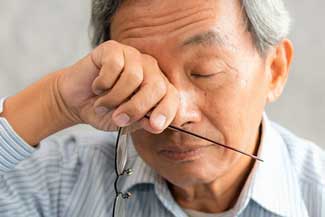

Dry, irritated eyes can be confusing—especially when they sometimes water or burn by the end of the day. At Totowa Eyecare, we see many patients who are unsure what’s behind these symptoms. Using real-life scenarios, we can better understand how lifestyle, work environments, and daily habits contribute to dry eye and what can be done to address it.
Take “John,” for example—a 35-year-old software developer who spends hours in front of multiple screens in a dry, air-conditioned office. He blinks less while concentrating, leading to eyes that feel gritty, tired, and sometimes watery or blurry. His journey reflects what many experience without realizing it’s dry eye.
Why Eyes Feel Gritty, Burn, or Sting
When we blink, tiny oil glands along the eyelids release protective oils that keep the tear film stable. Prolonged screen use reduces blinking by up to 80%, preventing those glands from working efficiently. Over time, they can become clogged, causing the sandy, gritty sensation that’s so common in evaporative dry eye.
Burning and stinging often appear later in the day as the tear film evaporates more quickly. Without enough healthy tears, the front surface of the eye dries out, increasing discomfort.
The Surprising Connection Between Dry Eyes and Watering
It may seem contradictory, but watery eyes can actually be a sign of dryness. When the eyes sense irritation from an unstable tear film, they trigger reflex tearing—producing a flood of watery tears that lack the oils and mucus needed for proper lubrication. These tears don’t stay on the eye’s surface long enough to provide relief, so the cycle of dryness continues.
Other Causes and Contributing Factors
While screen habits are a major cause of dry eye, other factors may be at play:
- Allergies and medications – Antihistamines and certain other medications can further dry the eyes.
- Contact lens wear – Even with the right fit, lenses can limit oxygen flow and increase dryness.
- Lack of sleep – Sleeping fewer than seven hours, or sleeping with partially open eyelids, can prevent the eyes from fully rehydrating overnight.
- Age and hormonal changes – Natural changes in tear production and composition can develop gradually over time.
Common Symptoms to Watch For
Dry eye doesn’t present the same way in every patient. Some experience mild irritation, while others notice multiple symptoms:
- Burning or stinging
- Grittiness or foreign body sensation
- Itching or redness
- Excessive tearing
- Blurred vision that clears after blinking
- Eye fatigue, especially in the afternoon
Getting Relief from Dry Eye
Over-the-counter artificial tears may offer temporary comfort, but they don’t treat the underlying cause. At Totowa Eyecare, we perform a comprehensive dry eye evaluation to determine whether your symptoms stem from oil gland blockages, insufficient tear production, or other contributing conditions. From there, we recommend targeted treatment options to restore comfort and protect long-term eye health.
Schedule Your Dry Eye Evaluation in Totowa
If you’re dealing with burning, gritty, or watery eyes, relief is possible. Visit Totowa Eyecare for a thorough assessment and a treatment plan designed for your specific needs. Call us today at 973-942-4221 or visit us at to book your appointment. Your eyes deserve lasting comfort and clear vision—let’s make that happen.